Shockwave therapy for physiotherapy & sports medicine.
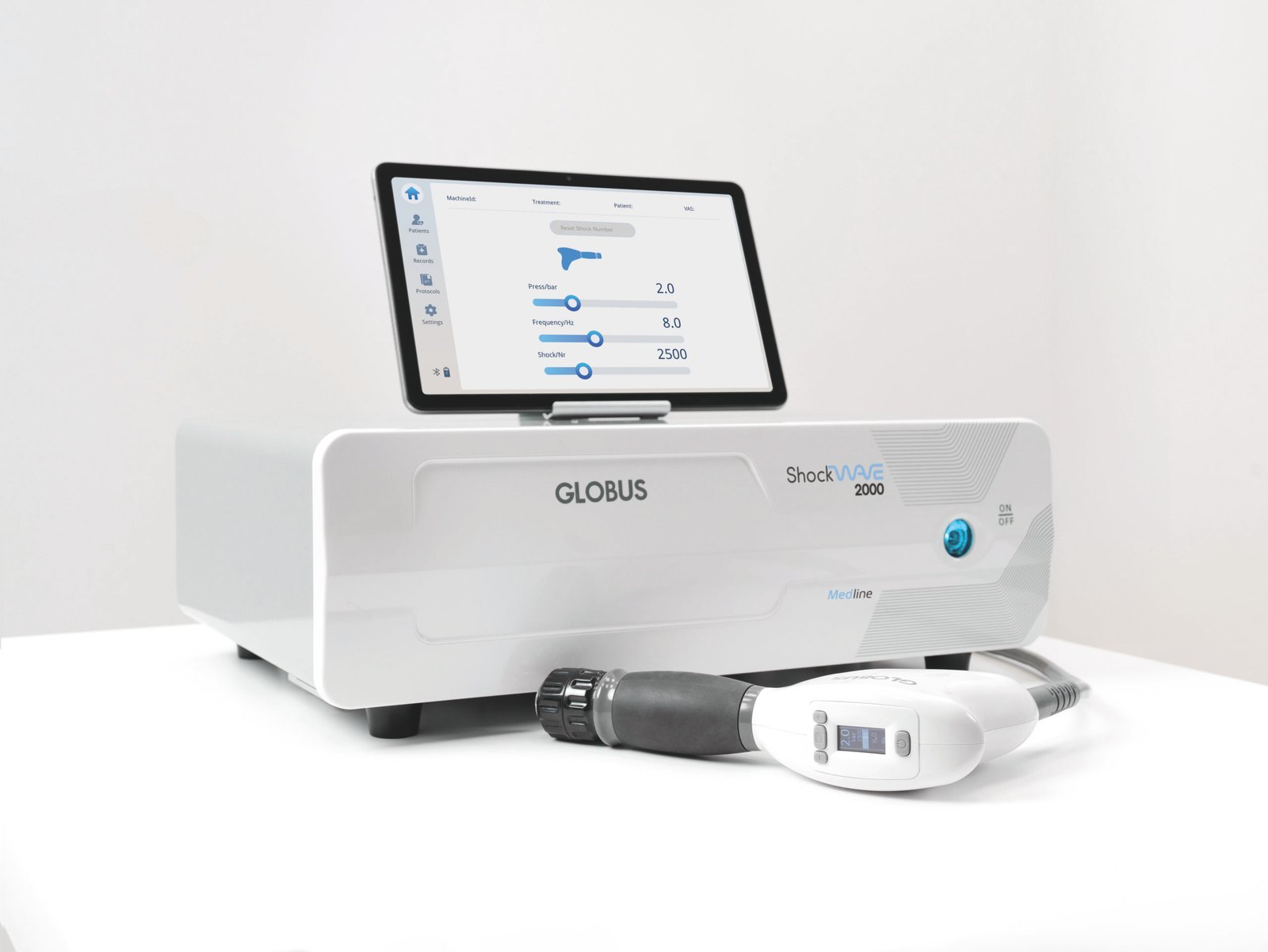
Professional radial shockwave for physiotherapy clinics, sports medicine and rehabilitation centres. The Globus ShockWAVE 2000 Med Line, for tendinopathy and chronic pain.
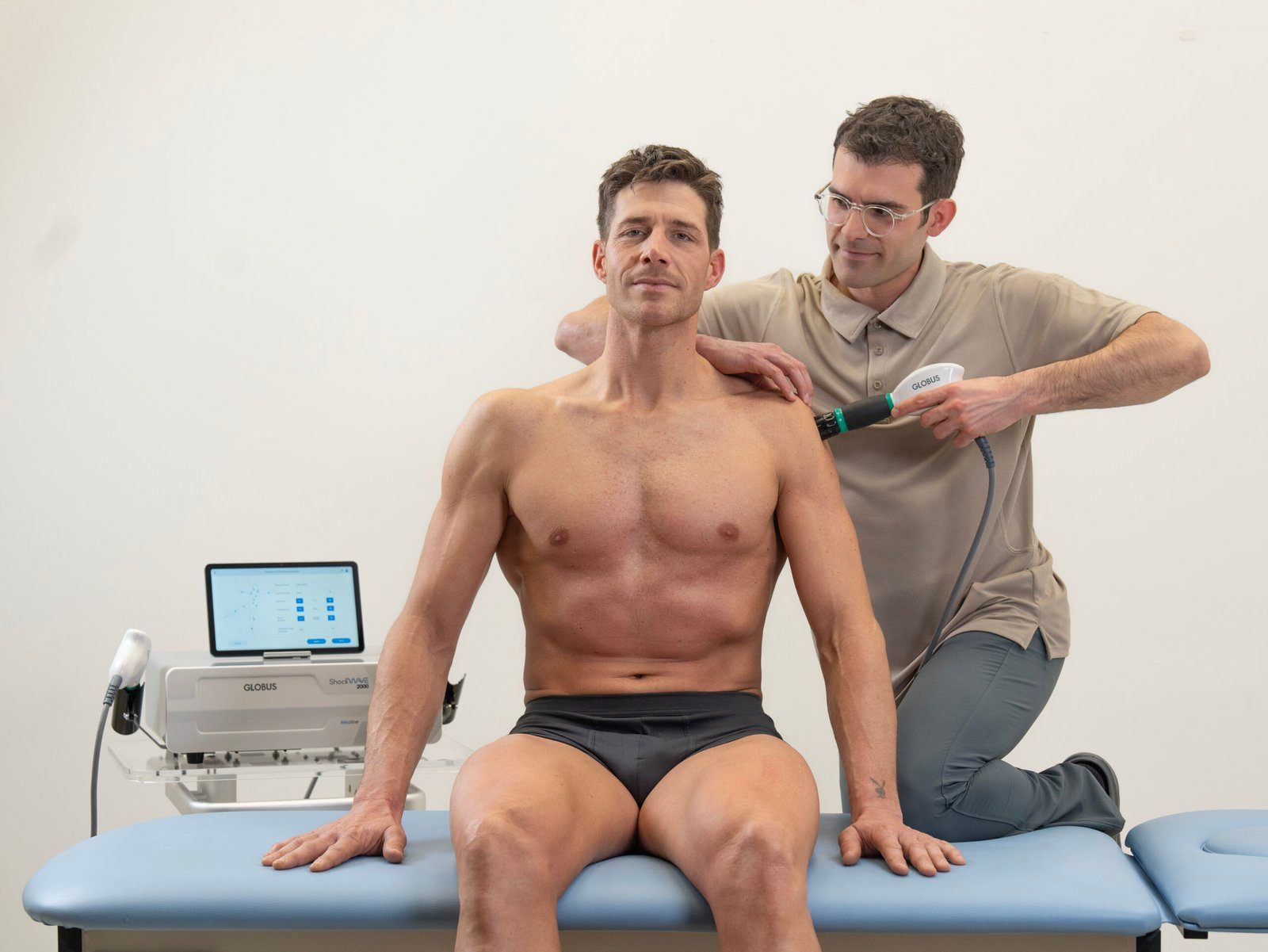
Radial pressure wave technology.
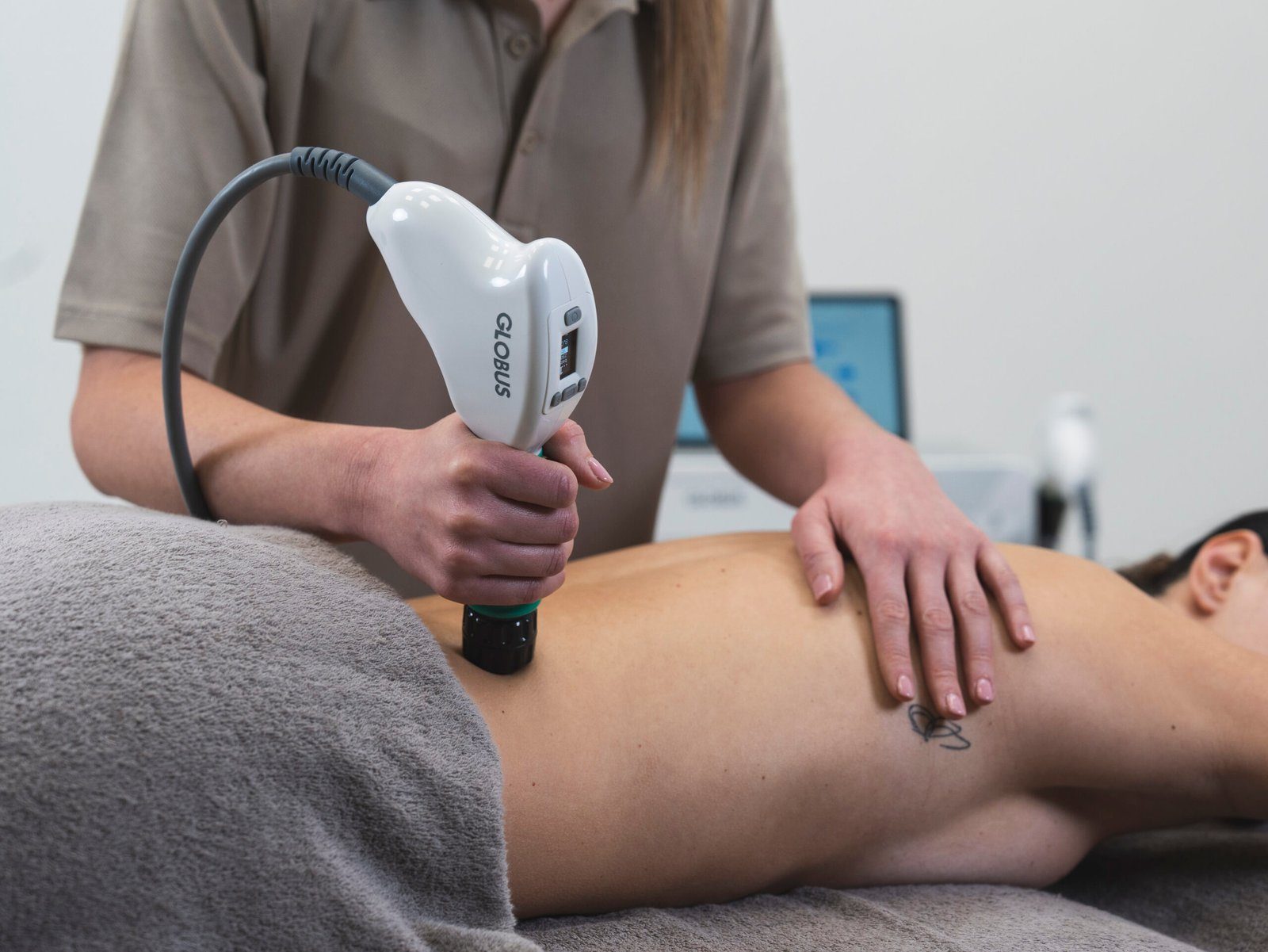
Shockwave therapy delivers high-energy acoustic pressure waves to targeted tissue through a handheld applicator. The waves stimulate repair, help break down calcifications, increase local blood flow and reduce pain through neurological pathways.
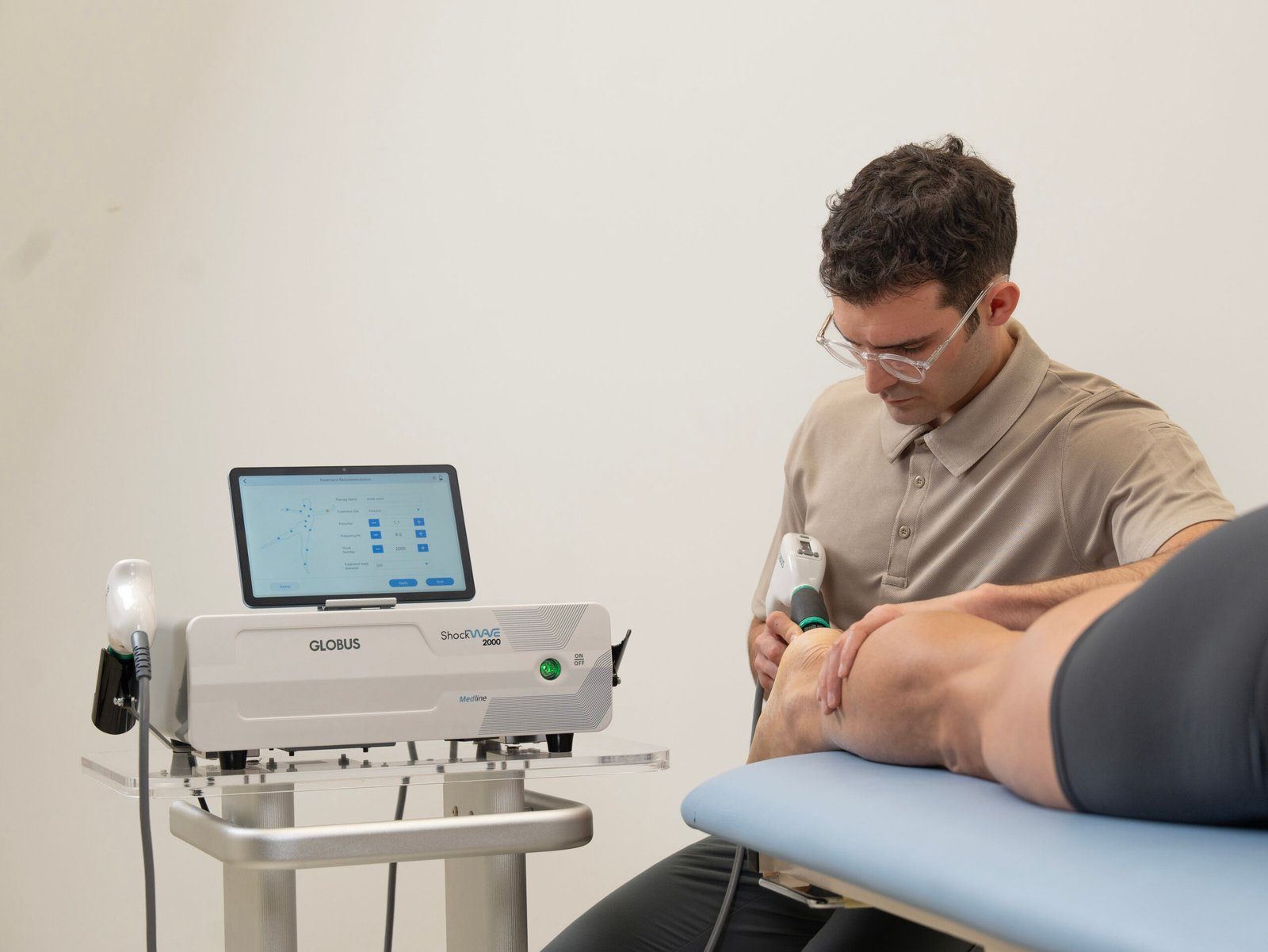
The Globus ShockWAVE 2000 produces radial pressure waves, the most widely used form in clinical practice. Sessions typically last 5 to 10 minutes, with most conditions responding in 3 to 6 sessions.
Three therapeutic effects.
Cellular effects
Acoustic waves create cavitation, microscopic bubbles that form and collapse in tissue fluid. This controlled mechanical stress triggers growth factor release, collagen synthesis and improved blood supply, restarting the stalled healing common in chronic tendinopathy.
Pain relief
Shockwave stimulates Substance P release and desensitises local nerve fibres. Many patients notice a reduction in pain after the first session, with progressive improvement across the course.
Calcification breakdown
Shockwave helps break down calcific deposits in tendons, particularly in the rotator cuff.
The numbers.
Patients with chronic plantar fasciitis reporting significant improvement after shockwave therapy.
Patients with calcific rotator cuff tendinitis achieving documented resorption of the calcification.
Significant pain reduction and improved function in chronic Achilles tendinopathy.
Most conditions respond to 3 to 6 sessions of 5 to 10 minutes, delivered weekly or fortnightly.
- Plantar fasciitis and heel spur syndrome
- Calcific tendinitis of the rotator cuff
- Achilles tendinopathy: mid-portion and insertional
- Patellar tendinopathy (jumper's knee)
- Lateral epicondylitis (tennis elbow)
- Medial epicondylitis (golfer's elbow)
- Greater trochanteric pain syndrome
- Trigger point therapy and myofascial pain
- Chronic neck and shoulder tension
- Stress fracture rehabilitation
Why add shockwave to your clinic.
- High patient demand: patients ask for shockwave by name
- A strong and growing evidence base
- Non-invasive alternative to injections and surgery
- Short sessions of 5 to 10 minutes that fit any diary
- A premium treatment in the UK market
- Treats chronic tendinopathy that other modalities struggle with
- Noticeable results from the first session for many patients
Clinics, sport, orthopaedics and vets.
Physiotherapy clinics
Increasingly seen as essential in musculoskeletal practice, filling the gap left by electrotherapy and manual therapy alone.
Sports medicine
Used for the tendon injuries that interrupt athletic careers, in particular Achilles, patellar and hamstring tendinopathy.
Orthopaedic specialists
Increasingly recommended as a first-line option before surgery is considered.
Veterinary practices
Growing quickly in veterinary care, especially for equine tendon injuries and small animal orthopaedic conditions. A dedicated veterinary version is available.
Not sure which device suits you?
Tell us what you treat and we will recommend the right one. Call or WhatsApp for a straight answer.